Essay · Part one of two · August 30, 2026
Micro-Collectivism in Small Doses
A block in Norway, Maine, and the American habit we stopped using.
About a year ago I was in Norway, Maine.
Not the country. A town of a few thousand people in Oxford County, on a street with a coffee shop selling day-old pastries at half price and bread ends for a dollar, a food co-op directly across from it, a rack of bicycles anyone can borrow for free, a restaurant called the Norway Pizza Xchange, and, a short drive away, a store that sells used food.
Used food. Dented cans, mislabeled boxes, things a distributor could not move. Sold cheap, to people who would rather buy it than watch it go in a dumpster.
What held my attention was how unideological all of it was.
Nobody on that street was running an experiment in communal living. They were running a coffee shop, and the pastries from yesterday were still good, and throwing them out was stupid. The co-op existed because buying in volume is cheaper than not. The used food store existed because food that cannot be sold at full price is still food.
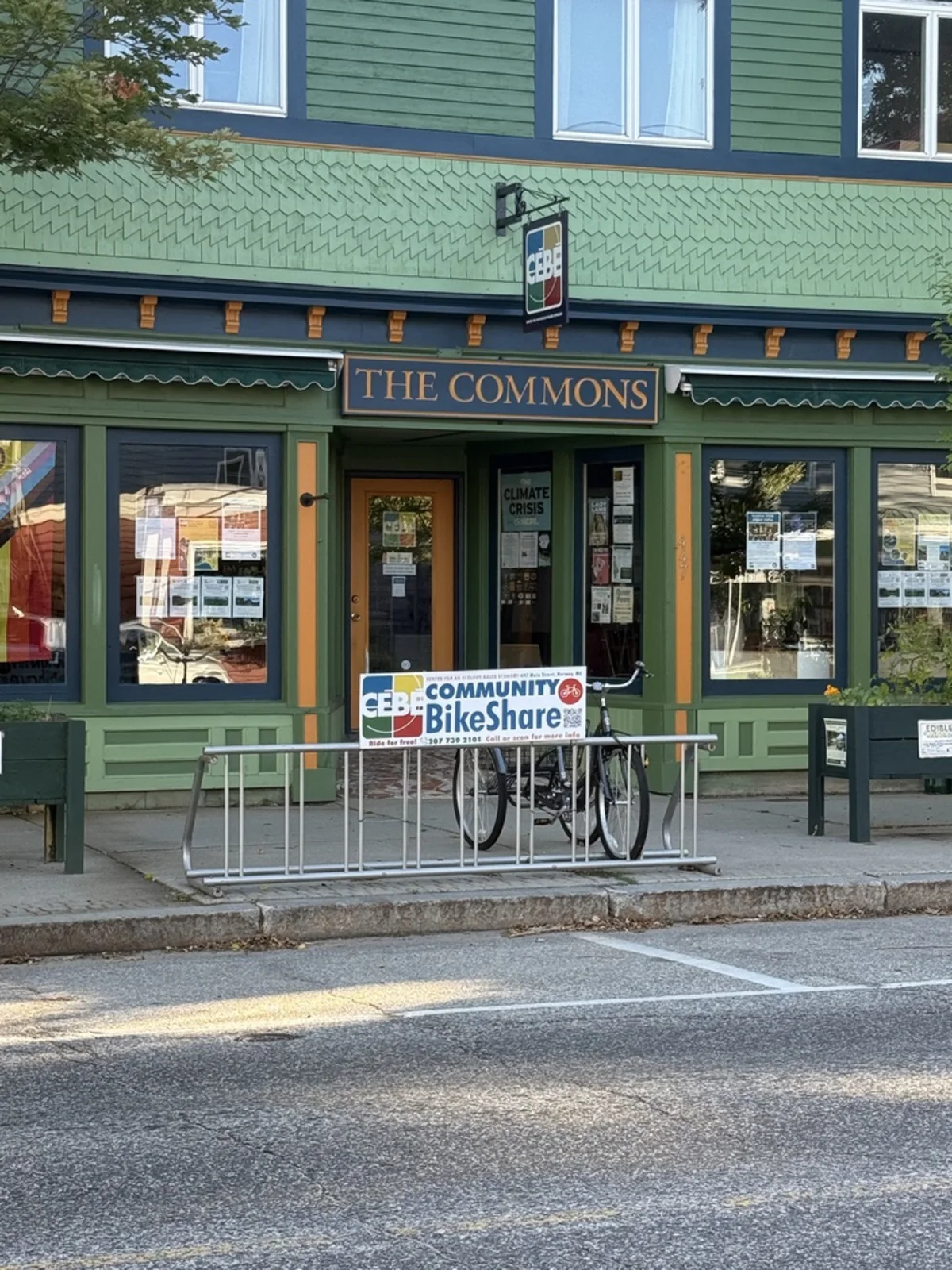
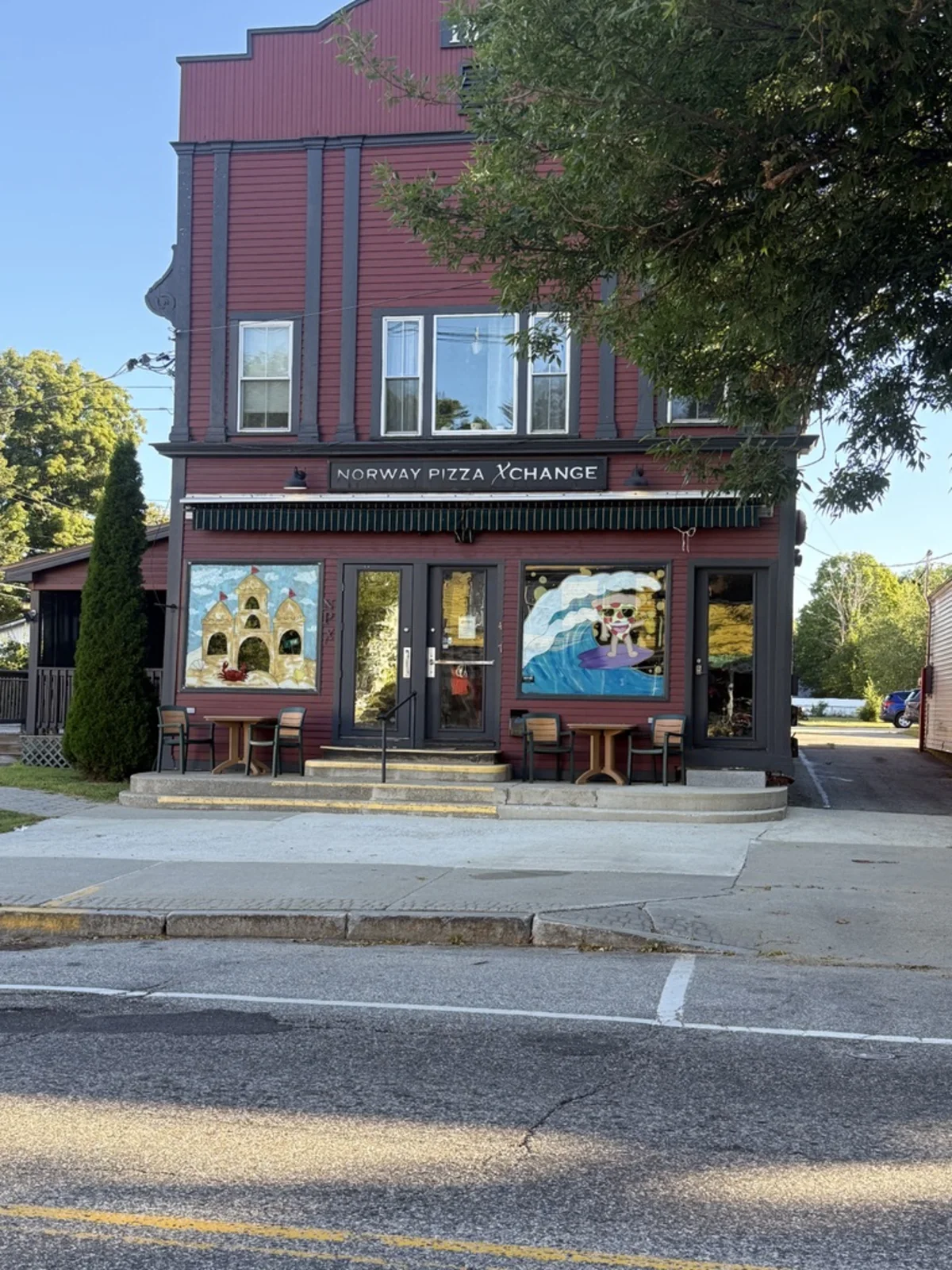
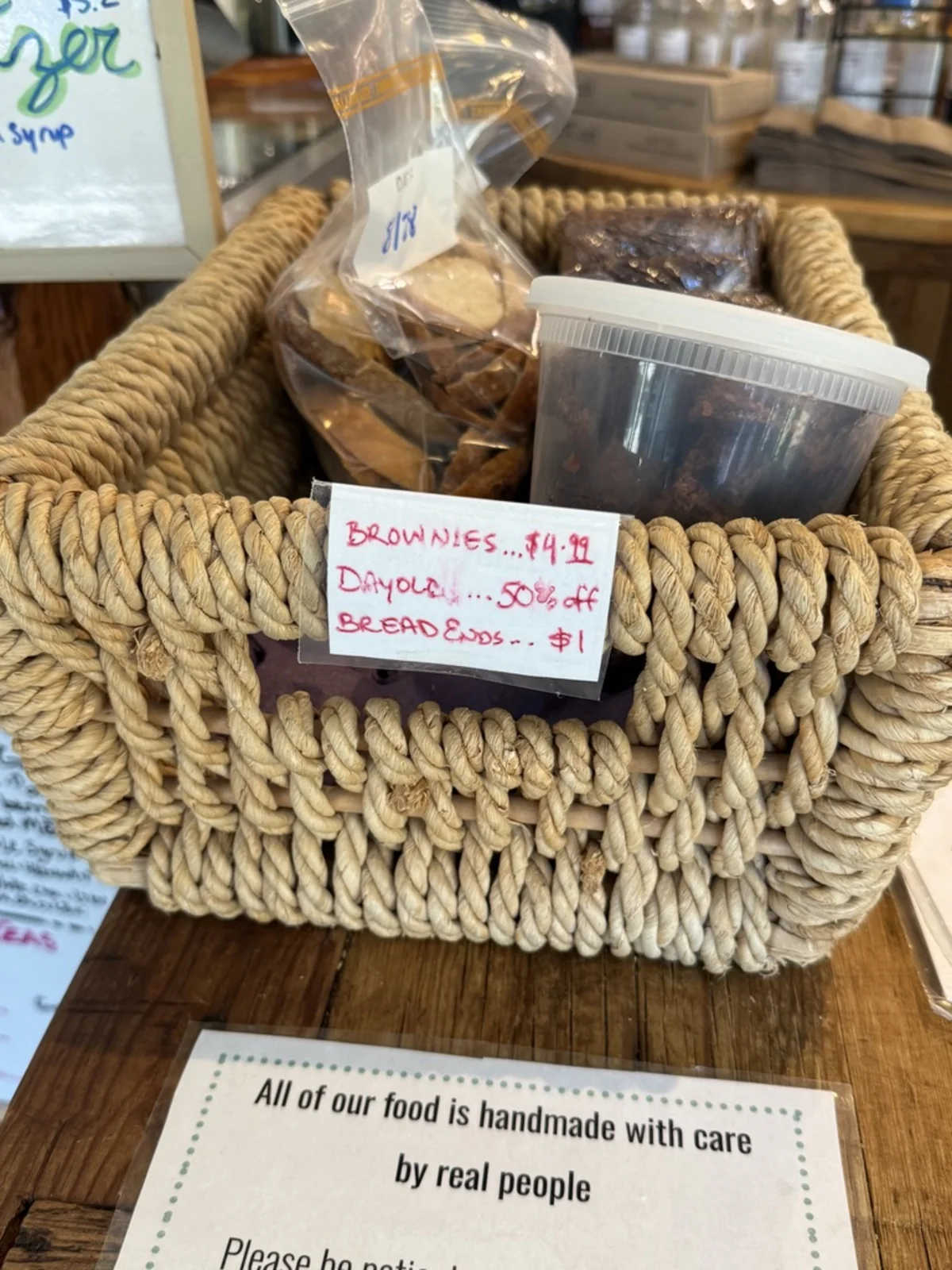
This is collectivism as thrift. It is small, voluntary, unsentimental, and you can walk away from it on any given Tuesday. I have been thinking about that combination ever since, because it is the shape of the thing I am building, and because I think Americans have convinced ourselves we do not do this.
We used to do it constantly.
The machinery we forgot
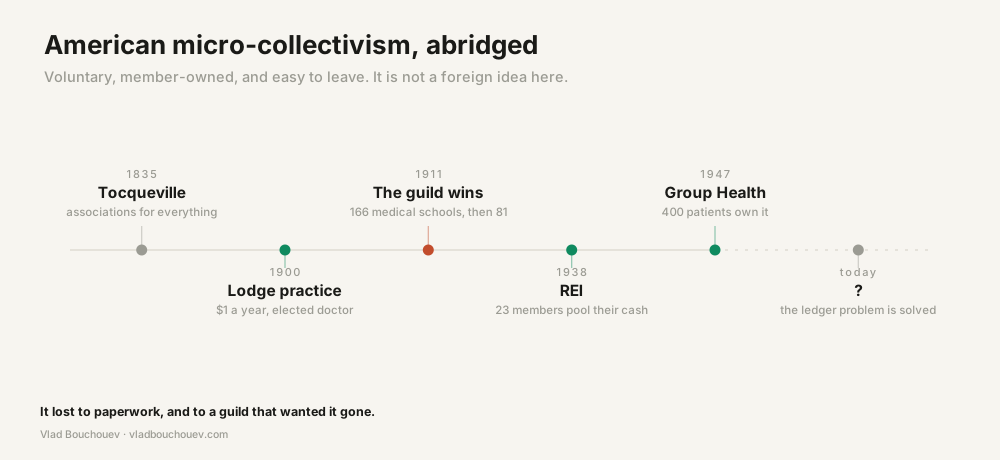
When Tocqueville came through in the 1830s, what struck him hardest was how fast Americans formed associations. Left alone, for any purpose at all, they organized. Every time a road needed building or a church needed a roof, a society appeared to do it. He treated this as the country's distinguishing habit.
That habit had teeth. By the turn of the twentieth century, a large share of American workers belonged to fraternal societies, and many of those societies had figured out something that sounds impossible now.
They hired their own doctors.
The arrangement was called lodge practice. A lodge would contract a physician for a flat annual fee per member. The rate was roughly one to two dollars a year. In New York in 1910 it ran about a dollar for an unmarried member and three for a married man and his family. A day's wage bought a year of medical care.
The part I find hardest to shake is the governance. The doctor had to win an election. The members voted on who their physician would be, and if he was bad at the job, they voted differently next year. Care was a service the membership purchased collectively and controlled directly.
Organized medicine understood exactly what this was, and killed it. Medical societies sanctioned doctors who signed lodge contracts. The AMA gained control of medical school accreditation, and the number of medical schools in the country fell from 166 in 1904 to 81 in 1918. Fewer doctors meant more leverage for the ones who remained, and lodge practice stopped being economically survivable.
None of that was inevitable. We had a functioning, member-owned, individually optional model of primary care in this country, and it was suppressed by a professional guild, not outcompeted by a better idea.
The same instinct, on the other coast
Norway, Maine has nothing to do with Norway. The town petitioned to be incorporated as Norage, from a local word for falls, and somewhere in the Massachusetts statehouse that became Northam and then Norway. Maine did this constantly. The coastal towns settled under British rule are Yorks and Falmouths. The interior, still governed from Boston and impatient about it, named itself after other people's revolutions instead. Paris up the road was a thank-you to France. Mexico was incorporated in 1818 in sympathy with a war of independence still being fought, and Peru in 1821, the year Peru won its own.
So the thread that runs west is a structural one. Fare Share, the co-op across from the coffee shop, is the same legal animal as two much larger things that grew up on the other coast, in a place where the Scandinavian influence arrived with actual Scandinavians. By 1910 they were the largest foreign-born group in Washington State, more than thirty percent of it. They came for a landscape that resembled the one they had left, and they brought a cooperative habit with them.
Two things came out of that soil.
In 1938, Lloyd and Mary Anderson could not buy a decent ice axe at a fair price, so twenty-three people pooled their money and bought together. Members paid a fee to join and shared the purchasing power. By the end of that first year there were eighty-two of them. REI is now one of the largest retailers in the country and is still, structurally, that same club.
In 1947, a coalition of farmers, union members and grange activists launched Group Health Cooperative of Puget Sound with four hundred consumer members. It was a health system owned by its patients. The founders described it explicitly as a middle ground between capitalism and socialism, which at the time was a genuinely radical position, since almost no American physicians practiced in groups of any kind.
Both of those are the Norway block at scale. A group of people worked out that the thing they each needed came cheaper if they bought it together, and then wrote down the rules.
Why this is not the collectivism people are afraid of
Here is the distinction that makes the whole argument work, and I think it is the reason this tradition is invisible to us now.
East Asian collectivism, in the shorthand version people carry around, is about the group having a prior claim on the individual. You belong, and belonging comes with obligations you did not choose.
American micro-collectivism inverts that. The individual has a prior claim on the group. You join because it serves you. You keep paying because it keeps serving you. You leave when it stops. The lodge member elected his doctor. The REI member got a dividend. The co-op shopper could shop somewhere else tomorrow.
It is collectivism downstream of individualism, which is why it never felt like a contradiction to the people doing it. Membership is not citizenship. The exit is the whole point, and the exit is what keeps the thing honest.
That also explains the ceiling. These structures work at the scale where you can see the ledger and leave without drama. Push them past that and they turn into institutions, and institutions stop being accountable to members and start being accountable to themselves. The right dose is small.
What actually broke
The story we tell is that mutual aid died because the welfare state replaced it, or because Americans got more selfish. I think the more boring explanation is closer.
Running a mutual society is administratively brutal. Someone has to keep the roll, collect the dues, chase the delinquents, adjudicate who qualifies, hold the meeting, count the votes, and keep the books straight enough that nobody suspects theft. That labor was volunteer, it was constant, and it did not survive a country that got more mobile, more dispersed and more employed.
Then employer-sponsored insurance arrived and made the question moot. Health coverage became a thing your job handed you rather than a thing you and your neighbors organized.
Almost every item on that list is overhead.
Which is the part software is actually good at
I am wary of the move where someone identifies a beautiful old social form and announces that an app will bring it back. Usually the app brings back the aesthetics and none of the substance.
But look at what killed the lodge. The roll. The dues. The adjudication. The books. The meeting.
Every one of those is a ledger problem, and ledgers are the single thing software has unambiguously solved. Membership, recurring payment, eligibility, transparent accounting, group decisions at a distance: every one of those is now a solved commodity, available to a group of two hundred people as easily as to a group of two hundred thousand.
Which means the constraint that ended American micro-collectivism has quietly disappeared, and almost nobody has gone back to check what is possible now.
Small doses, and why healthcare
I am not arguing for collectivism as a governing philosophy. I do not want it running the economy, and I am suspicious of most attempts to scale it past the point where members can see what is happening with their own money.
I am arguing for it in specific places, at small scale, where the alternative has failed on its own terms.
Healthcare is the obvious candidate, and not for sentimental reasons. It is the category where an individual has the least pricing power, the least information, and the least ability to walk away. It is where pooling is most valuable and where the pool you are currently in was chosen by your employer. It is also, historically, the exact place Americans built this and had it taken from them.
The block in Norway did not persuade me that we should all live in co-ops. It reminded me that the instinct is still here, still practical, still unembarrassed about being cheap, and that we have been told a story about ourselves in which it does not exist.
That is part one. Part two is the uncomfortable half. Everything I have just described is collective ownership of the means of production, arrived at voluntarily and through the market. Read that one way and it is communism. Read it the other and it is capitalism working exactly as advertised. I have come to think those two words are far less opposed than either side needs them to be.